img
Michael Schuresko
(touchscreen version of this webpage for iPhone, etc)
News
Latest News
News
  • Back in the graphics world
    • Leaving Google. Starting at oblong.
    • 2012-02-18T18:12:00.000-08:00
    • (link)
  • job switch / google
    • I now work for Google. Hooked was great fun, and I worked on interesting projects with wonderful people.
    • 2010-12-13T13:45:00.000-08:00
    • (link)
  • Employment
    • I have now joined the workforce : this Monday I will start work at Hooked Wireless
    • 2009-09-30T22:10:00.000-07:00
    • (link)
  • doctored
    • I officially have my PhD, my thesis is available at http://tintoretto.ucsd.edu/jorge/group/data/PhDThesis-MikeSchuresko-09.pdf
    • 2009-09-30T22:07:00.000-07:00
    • (link)
  • First post
    • The "news" section is now synced to my new blog.
    • 2009-09-30T19:37:00.000-07:00
    • (link)

For more news, see http://mikeschuresko.blogspot.com/search/label/news.
Current
What I'm currently studying

I graduated with a PhD from the Department of Applied Math and Statistics in the School of Engineering of the University of California, Santa Cruz. My research was with Prof. Jorge Cortés in the Mechanical and Aerospace Engineering department of University of California, San Diego. Our work was in the general area of robotic control and control theory. I desperately need to hand off maintenance of the web page for the controls research group at UCSC.
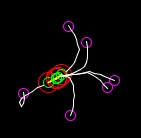
My research sits at the intersection of distributed algorithms and distributed control. Distributed control is the study of how multiple computational units, sensors and actuators can be networked together to control a single system, usually with an emphasis on requiring minimal communication. Distributed algorithms studies similar topics, but without sensing and actuation, and a greater emphasis on computation. I largely deal with problems featuring a swarm of robots communicating over a wireless network.

My thesis dealt with problems related to how to constrain motion of robots in a swarm so as not to lose global network connectivity of the swarm. I focussed on ways to do this which require local communication, with the desire of minimizing the amount of communication required.

Bio
A brief sketch of my academic and industrial experience

I started graduate school intending to study computer graphics, and still have a collection of class projects and flashy demosfrom those days. I chose my current advisor and research area after taking a class on non-linear control theory.

Prior to coming to UCSC, I worked for a few years as a programmer at Common Point Inc and the now-defunct Sense8 Corporation I was lucky enough to have the opportunity to write collision-detection systems professionally for one of these companies, and improve an existing collision-detection system for the other.

CMU Before that I completed my undergraduate degree in computer science (with a minor in mathematics) at Carnegie Mellon University. I still occasionally visit their puzzle page.

Previous intern-ships include work on graphics and GIS at TerraSim and working on graphics and robotics in support of machine learning and robot learning research at the Naval Center for Applied Research in Artificial Intelligence.

Publications
Papers and cited works
img Publications
Journal
Journal articles
  1. Distributed tree rearrangements for reachability and robust connectivity
    M Schuresko and Jorge Cortés
    SIAM Journal on Control and Optimization, submitted
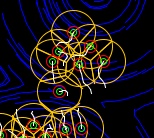
    • See here, here, or here for a simulation and visualization in Java
  2. Distributed motion constraints for algebraic connectivity of robotic networks
    M Schuresko and Jorge Cortés
    Journal of Intelligent and Robotic Systems, accepted
    • See here for a simulation and visualization in Java
Conference
Short / Conference articles
  1. Distributed tree rearrangements for reachability and robust connectivity
    M Schuresko and Jorge Cortés
    Hybrid Systems: Computation and Control 2009,San Francisco, 2009
    • See here for a simulation and visualization in Java
  2. Distributed motion constraints for algebraic connectivity of robotic networks
    M Schuresko and Jorge Cortés
    Proceedings of the 47th IEEE Int. Conf. Decision and Control, Cancun, Mexico, 2008.
    • See here for a simulation and visualization in Java.
    • You can also see my slides from the talk I gave at CDC
  3. Safe graph rearrangements for distributed connectivity of robotic networks
    M Schuresko and Jorge Cortés
    Proceedings of the 46th IEEE Int. Conf. Decision and Control, New Orleans, Louisiana, USA, 2007, to appear.
    • See here for a simulation and visualization in Java
  4. Correctness analysis and optimality bounds of multi-spacecraft formation initialization algorithms
    M Schuresko and Jorge Cortés
    Proceedings of the 45th IEEE Int. Conf. Decision and Control, San Diego, California, USA, 2006.
    • A simulation platform for some of the algorithms described in the paper is available here.
Software
(software referenced in academic publications)
  1. cclsim : Control and Communications law SIMulator The java framework we use for our swarm simulations.
  2. A sampling of other software can be found elsewhere on this page
Misc_pubs
Other published work
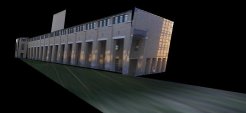
  1. An undergraduate class project on single-view modeling done for a class on image-based modeling and rendering
    This project was cited in "A Two-Stage Approach for Interpreting Line Drawings of Curved Objects" presented at the EUROGRAPHICS Workshop on Sketch-Based Interfaces and Modeling (2004)
  2. Technical reports for 2007 and 2006.
Thesis
Phd Thesis
Controlling global network connectivity of robot swarms with local interactions
Department of Applied Mathematics and Statistics, University of California, Santa Cruz
Other
Demos, toys, fun, etc.
img
Demos
...from my days as a graphics student
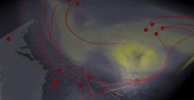
  1. A class project for Scientific Visualization Seminar in which I developed a visualization of Hurricane Isabel.
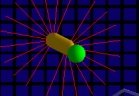
  2. A project for a machine learning class on using reinforcement learning and neural networks to train a simulated robot
  3. A Neural Network Visualization I developed for my own amusement.
  4. An application of genetic algorithms to model-based vision.
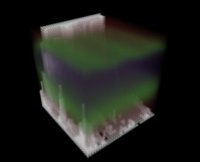
  5. statistical volume rendering A small experiment trying to use volume rendering to visualize volumes of statistical distributions. Never really got off the ground. link
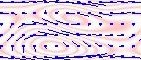
  6. forced couette flow Simulation and visualization showing the beginning of turbulence in the "plane Couette flow."
Fun
Hobbies/Toys/misc.
Fun
  1. Playing with audio samples (more available here )
  2. Composition with midi is a hobby of mine.
  3. Comics,comics,comics.
  4. My favorite internet radio station
Toys

  1. screenshot I have recently become a fan of Processing.org, and have made my first tiny demo using it.
  2. I wrote this little calculator thing as a sort of "Hello World" while learning JavaScript
  3. This piece of Python code makes thumbnail pages from directories of images. The results look like this (Requires PIL)
  4. A poorly-documented demonstration of engineering amplifier non-linearites to produce particular sets of overtones.

Misc

  1. If you know of any solid linear algebra packages for C, C++ or Java, I would be interested in hearing about them, please send me e-mail and I will collate the information here.
  2. Apparently "swarm robotics" is an emerging technology

blog
my "blog"
Blog
  • Scripting, processing.org, images, video, etc
    • So, at my new job, a bunch of my coworkers are "designer-programmers." Usually these are people who have training in art or design and who teach themselves how to program (often quite well). As one might expect, many of them shifted into C++ and OpenGL after first whetting their appetites with processing.org (which I will simply call "processing" from here on).

      Every once in a while I'll run into a quick one-off scripting task whose output (or input!) is an image or a video asset, and my first instinct will be to start looking up scripting language wrappers around things like PIL and ImageMagick. Whenever I express a thought in this vein, invariably, one of the designers will say "Why don't you just use processing?" or "Processing can do that!"

      And it turns out that they're right. I have conceded that, even without a strong knowledge of processing, processing is a better tool for quickly programmatically generating images and video than many of the more conventional scripting languages out there (including Ruby and Python). There are two reasons for this. The first of these is that processing gets out of your way, and lets you call visually-related API functionality without having to do a bunch of imports, or the equivalent of "system.out.println instead of printf". The second is slightly more subtle. Processing is structured around the idea that you'll have a setup, a draw, and an event loop, and that the "draw" will draw things, either every frame, or on certain events. It is absolutely amazing how much more natural this is than "print stuff out" for tweaking and debugging programs whose output is (primarily) other visual artifacts.

    • 2012-04-12T00:36:00.001-07:00
    • (link)
  • Open Source
    • I am currently open-sourcing or thinking about open-sourcing three pieces of software
      1. The simulation platform I used for most of my research in grad school. You can run it and see the results at http://alumni.soe.ucsc.edu/~mds/cclsim/.

        Currently I am in the process of talking to the appropriate people at the University of California about how to do this, as I wrote most of this in the process of research for the UC. Hopefully it'll turn out that language in one of the federal grants I received forces me to open it, or that at least it'll turn out to have so little commercial application that opening it is not a problem.

      2. The library and platforms used to generate most of the projects at http://alumni.soe.ucsc.edu/~mds/?News=collapse&Other=expand&Demos=expand#Demos.

        While these were developed when I was a graduate student, most of it was done before I had any research grants, and all of it was done on my own equipment.

        My main hesitation about opening it up is that I'll have to publicly admit to having used "glVertex3f" as late as 2004/2005.

        For what it's worth, a snapshot of the code is at http://www.club.cc.cmu.edu/~mds2/old_ucsc_gl_source/

      3. The source for http://alumni.soe.ucsc.edu/~mds/spacecraft_sim/.

        While this project was built on top of the libraries described in the second item, this particular integration *was* done as part of official university research. I'm hoping that the fact that I did it on a NASA grant means I am forced to open it, but because it was done as a University researcher, I am pretty sure I have to go through a different path to open it up.

    • 2011-12-15T21:48:00.000-08:00
    • (link)
  • Shared map : others may find it useful
    • Back when I was looking for postdocs in 2009, I have to admit to having had a geographic bias, and was particularly interested in Universities in Southern California which might offer postdocs related to my research area.

      So I decided to experiment with a little-used Google Maps feature, and create a "map of PhD-granting Southern California Universities." It is of somewhat little use to me at the moment, but I thought I'd share anyway, just in case anybody else with a two-body problem needs such a list.

      Map of Southern California Universities
    • 2011-05-16T16:15:00.000-07:00
    • (link)
  • View of the San Joaquin Valley, including fruit/nut trees and aqueduct
    • 2010-10-05T18:28:00.000-07:00
    • (link)
  • Hyperbolic Paraboloid Buildings
    • Ever since I first stumbled upon them in "A Visual Dictionary of Architecture" I've been fascinated with the concept of hyperbolic paraboloid buildings.

      Essentially a hyperbolic paraboloid is a structure which, in some frame, is described by the equation

      z=x*y

      If you slice it along constant z you get

      1~ x*y or y~1/x or x~1/y

      If you slice it along a line y=k*x you get

      z=k*x*x or z=k*x2

      But the part that makes it useful as a surface for buildings is that if you slice it along constant x or constant y you get

      z~x or z~y

      in other words, a straight line.

      For this reason, it is called a "ruled surface", and a framework for it can be made entirely out of straight beams, as in the pictures from this site

      http://www.savetrees.org/Hyperbolic%20Paraboloid%20roof%20shelter.htm


      One problem with such a surface is that, while it is easy to construct the frame out of straight beams (and the resulting structure is known for its strength), constructing the roof to fit into the frame is non-trivial, especially if the surface must be hard.

      It is *possible* to construct something that mostly fits snugly over it by cutting pieces out of a cloth tarp (as shown in the above link), but any patch of the true surface of the object is curved (as well as any line which is not constant in either x or y)

      One solution might be a "concrete tent" similar to what is proposed in this article
      http://www.wired.com/science/discoveries/news/2005/03/66872 (start with a "tarp with sections cut out" and brush wet concrete over it. Then let the structure harden)

      Another alternative might be to layer a fine mesh of straight wires along constant x and constant y, and take some goopy filler material, such as plaster, and brush it over the wire mesh. I wonder if something like this is how they make permanent buildings with hyperbolic paraboloid roofs. Some of the images of such structures certainly look like a wet material was painted on top of a mesh and then allowed to dry, although larger hyperbolic paraboloid structures, such as the Catholic Cathedral on Gough Street in San Francisco, are often clearly made from piecewise surfaces (float or otherwise). I think to have a piecewise surface of flat segments perfectly conform to a frame of straight segments in such a roof, the segments have to be triangles (and highly irregular ones at that!)
    • 2010-08-21T13:24:00.000-07:00
    • (link)
  • This time last year


    • This time last year, the mountains around Los Angeles were on fire. At 15 miles away, you could see the flames sometimes in broad daylight. And at night a 30 degree arc of the skyline would glow red. One of my favorite nights in Los Angeles was the time I sat out with a bottle of cheap red wine just watching as the sky burned around me.

      Side note : the way I found the time-lapse video of the high voltage tower construction
      http://mikeschuresko.blogspot.com/2010/01/really-cool-time-lapse-video.html that I posted around this time last year was by looking for videos of the Station Fire, and finding this one
      http://www.youtube.com/watch?feature=iv&v=jR_3N7nVPw8 by the same guy. I like the music in his videos, but I feel that they don't adequately capture the scale of the fires or how the sky turned red from the other side of the city or how everything smelled like a smoky oak campfire.
    • 2010-08-19T17:22:00.000-07:00
    • (link)
  • Re-posting an interesting idea.
    • Re-posting
      http://robotmonkeys.net/2010/07/22/bullet-train-hopping/

      Jonathan writes:
      "Jianjun Chen in China proposed an interesting idea for eliminating station dwell times for trains. In his/her design, each train has a detachable boarding shuttle mounted on the roof of the train. Passengers who wish to disembark leave the main passenger compartment of the train, and enter the shuttle. Meanwhile, embarking passengers board an identical shuttle already located at the station. As the train approaches, the shuttle mounted on the train, disengages so it can slow to a stop at the station, while the shuttle is grabbed and mounted onto the moving train."
    • 2010-07-27T15:31:00.000-07:00
    • (link)
    • http://earthobservatory.nasa.gov/IOTD/view.php?id=44717&src=eorss-iotd

      You can see Santa Cruz (and the rest of redwood country) on this map.
    • 2010-07-21T17:28:00.000-07:00
    • (link)
  • A manifesto in the form of a sequence of seemingly unrelated ideas
      • Programming is a social activity. Sure there are cases where you are working with a fixed set of libraries you know well, and you're trying to generate something interesting within this vocabulary of thought, but most industrial coding seems to consist of cobbling various libraries together.
      • Computing is a social activity. (no explanation needed)
      • (completely unrelated) Things that only the "dorky kids" did in my generation are the exact things "all the kids" seem to be doing in subsequent generations.
      • Programming is the fundamental activity people do with computers, much like "driving" is the fundamental activity people do with cars
      • Learning to program only *seems* hard because we try to force students from zero to programming-literacy in one college semester, then fail them if they fall behind on the interesting stuff that depends on that basic literacy. Imagine if we spent a year slowly teaching programming for every year we taught kids about reading, writing or arithmetic.
      • Analogy between modern professional programmers and ancient scribes.
        • Elite group of educated scholars
        • Write using needlessly difficult technology (either "C" or "All caps and no punctuation")
        • Mostly write things like "So and so owes the king 15 sheep" / modern day business software
      • Analogy between programming and other basic intellectual tasks.
        • Perhaps in the future being a "professional programmer" will be as weird as being a "professional writer" or a "professional mathematician" today
        • But, likewise, everyone will need to do a little reading/programming/arithmetic
        • There may be many "high school programming teachers"
      • Printing press analogies
        • Looking at computers and the internet to day and getting interested in them as "fascinating machines" is like looking at the first printing presses and becoming obsessed with the screw mechanism.
        • Omitting the rest of the analogy
    • 2010-07-19T18:58:00.000-07:00
    • (link)
  • Robot household cleanup and RFID
    • What if every thing in your house that wasn't trash had an RFID tag?

      Your household swarm of cleanup robots could potentially pick up every item. If the item doesn't come with an RFID tag, it goes in the trash/recycling/etc. (telling these apart might be hard). If it does come with an RFID tag, there's a household database that tells your robots where the thing goes when it gets put away.

      I suppose this wouldn't solve all the problems with "program robots to clean your house" but it sure seems like a big first step. (It might be worth testing any proposed solution to the "robots clean your house" problem with the "the baby just defecated on the floor" thought experiment)

      (food items would be an interesting issue, the RFID tag would have to have some sort of expiration information, and when the food gets thrown out / composted/recycled, the RFID tag has to be removed for later reuse. Things like shampoo bottles and toothpaste tubes present similar issues.)

      P.S. If any readers find similar ideas posted elsewhere, please post links to the more interesting write-ups in the comments section.
    • 2010-06-22T15:27:00.000-07:00
    • (link)
  • The right approach, I think
    • http://www.oxygen.lcs.mit.edu/Overview.html

      Having glanced through the websites of several "ubiquitous computing" research groups, I think that the Oxygen project at MIT is the closest I've seen to "something on the right track" Partly I occasionally track / glance at what's happening in this field because I think it could become an interesting thing to be involved in in the future. Partly I keep looking at it because I have this sneaking suspicion that, when we start getting to pervasively embedded small computers, HCI will start looking like a robotics problem. And partly I'm interested in how the network connectivity for pervasive computing might work : perhaps the distributed robotics and ad-hoc network people have a head-start on some of the issues that might come up.
    • 2010-06-22T14:08:00.000-07:00
    • (link)
  • Central Valley Airport
    • Why I think it would be reasonable to construct an international airport in California's Central Valley (pending the construction of at least the Central Valley portion of the California High-Speed Rail project)

      1. Its flat (so you can arbitrarily scale it up with new runways) Of course the current solution to overcrowding at SFO and LAX is to increase runway space at outlying airports like SJC and Ontario -- one of which is already in the central valley, while the other one is along one of the proposed high-speed rail lines (albeit the part of the line least likely to be built soon -- most sensible discussion thinks high speed rail will connect to CalTrain/Metrolink, and CalTrain will take care of the San Jose --> San Francisco leg)
      2. High speed rail will make a hypothetical Central Valley Airport accessible from the current major metropolitan areas (not useful if you're flying to LA, but what's an extra hour of train ride if you're going to Singapore?)
      3. One of the parts of the Schwarzenegger agenda I actually sort-of-agree with is the (unstated) intent to push urban/suburban growth into the Central Valley, most likely along the CA-99 corridor. The housing bubble stopped this somewhat, but the infrastructure/empty housing is in place, and a chain of UC campuses stretching from Davis to Riverside could spur job growth.
      4. Part of me secretly wants to teach at UC Merced. I predict that, as time goes on, UC Merced will rapidly become a top engineering school, (making it even harder for me to do this). High speed rail and a massive airport would make it easier for an urbanite like me to live there.
      5. Unrelated, but I'd like to curse the Southern California software industry for locating primarily in the public transit deadzone of Santa Monica. Although I'm told that there is a new Expo Line they are building between downtown and Santa Monica. I'd like to remind everyone that the massive Southern California megalopolis is "train scale" and not "car scale."


      (edited later to add)
      One of the drawbacks to this plan (and plans involving "Central Valley growth" in general) is that the Central Valley is already being used for agriculture (and is fairly unique agricultural land). According to Wikipedia,

      "The Central Valley is one of the world's most productive agricultural regions. On less than 1 percent of the total farmland in the United States, the Central Valley produces 8 percent of the nation?s agricultural output by value: 17 billion USD in 2002."

      Presumably some of it can be diverted from agricultural use, but it could radically change our food production if it were to entirely convert over to sprawl.
    • 2010-05-27T21:36:00.000-07:00
    • (link)
  • On band.
    • I was sitting home sick, watching youtube videos

      http://www.youtube.com/watch?v=qybUFnY7Y8w
      http://www.youtube.com/watch?v=PxANVR07GVI

      (who does their videos, by the way? Pete would probably know.)

      when I came across
      http://www.youtube.com/watch?v=EltW4w2W_Ys and I started thinking about my "high school band" days, and how our sound always sounded so *mushy* and I had the recurring thought "If the band's seating is 100 ft across, and sound travels at 1000 ft/sec, the clarinets should hear the trombones be off by 1/10th of a second -- or, at 120 bpm, 1/5 of a beat."

      I mean, I'm sure skilled musicians (not me at the time) compensate for this in a variety of ways : but any form of compensation you could have only "works perfectly" for at most one spot (2 spots if the band is aligned precisely along a line). It seems like the "best" you could do is "everyone plays off the conductor's baton" (information from this travels at the speed of light) and for a listener at a large distance, l, from the center of the band, to whom the band is aligned perpendicularly, hears different instruments as if they were at most
      sqrt(l2 + 2500) - l
      feet apart, which, as l gets large, behaves sort-of like (1/(2*l)])*2500. Or, better yet, pick the spot (the king's chair?) at which the sound has to be perfect, and align the entire band along the rim of a semicircle with that spot as the center (somewhat close to what bands and orchestras actually do).

      But still, the time delay to to sound travel when you're sitting inside the large band/orchestra means that musicians can't really react to each others sound they would in a small ensemble. In essence, they have to rely on the (centralized?) conductor for synchronization. Which is probably yet another one of the many reasons why groups that do real improvisation tend to be small.

      Also, that guy with the monocle in the elite box off to the side? He's probably hearing one of the worst orchestral performances of his life.
    • 2010-05-20T23:01:00.000-07:00
    • (link)
  • I have a weakness for far-off space station designs
    • Cool

      http://lifeboat.com/arki/design-construction.shtml

      I'd live in one. I like the whole modular-architecture aspect to it as well.

      Not as expansive or ambitious, however, as :
      http://en.wikipedia.org/wiki/Island_Three
    • 2010-03-04T22:30:00.000-08:00
    • (link)
  • OpenSocial etc.
    • A thought about where "social networking" could go : instead of just being "a thing that lets you post messages for your friends", the permission groups on social networking could be "the equivalent of AFS-style permissions and groups on the internet-wide massively parallel computer"

      If this is combined with a shift of UI metaphors from "desktop, file, etc" to activity and shared artifact it could provide the mechanism of access control for all of the things we do on computers once we start wanting to share not only the finished products, but also edits, revisions, etc, with friends.
    • 2010-02-10T16:16:00.000-08:00
    • (link)
  • really cool time-lapse video


    • http://www.youtube.com/watch?v=iTfx9n2ImMc


      Timelapse video of construction of a high-voltage tower in Southern California / Central Valley
    • 2010-01-04T22:58:00.000-08:00
    • (link)
  • I think I should probably learn this...

    • https://cvs.khronos.org/svn/repos/registry/trunk/public/webgl/doc/spec/WebGL-spec.html


      WebGL. Apparently it integrates with the "canvas" element. I wonder if IE will properly support it.

      I wonder if it matters anymore at this point whether IE supports it ;)

      Seems to me, though, that the bulk of the applications I use either run or can run over the web, that its easier to get someone else to run your web app than your "compiled for XXX platform" app, and that Javascript/HTML/CSS is almost entirely unsuited for the type of applications I'd want to write. So, on that side, its probably about time for something like this.

      On the other hand, I seem to recall VRML having Javascript support way back in the day, and am somewhat inclined to describe "manipulating scenegraphs with a functional language" as a more advanced form of programming than "mimicking C-style OpenGL calls in the same functional language" It is not as if one could easily implement an efficient scenegraph on top of a JavaScript OpenGL API. On the other hand, this sort of thing *might* be the appropriate way to "incorporate 3d style effects into a 2d Javascript UI"...
    • 2010-01-02T13:18:00.000-08:00
    • (link)
  • How I lived in grad school...
    • How I lived in grad skool
    • 2009-12-10T21:21:00.001-08:00
    • (link)
    • Cool devices my friends have pointed out to me.

      http://en.wikipedia.org/wiki/Monome


      http://en.wikipedia.org/wiki/Chumby

      Cool concepts:

      http://en.wikipedia.org/wiki/Ambient_device
      http://en.wikipedia.org/wiki/Ubiquitous_computing
      http://en.wikipedia.org/wiki/Internet_of_Things
      http://en.wikipedia.org/wiki/Cyber-physical_system
      http://en.wikipedia.org/wiki/Ambient_intelligence
      http://en.wikipedia.org/wiki/Physical_computing

      These are all mostly unrelated to monome
    • 2009-11-30T23:59:00.001-08:00
    • (link)
  • 21st century "libraries"
    • I propose that, in the near future, as funding and demand for public libraries partially dries up, due to competition from the internet, we introduce an equivalent concept of "public computer cluster".

      The idea is that, much as libraries give everyone, even those without homes, bank accounts, credit, etc, access to books and a place to read them, municipalities of the future could fund open public computer clusters, where anyone can just walk in, and grab a terminal with a web browser.

      Of course, I got this idea by actually looking at libraries, which are beginning to offer this in addition to "books and a place to read them", but I didn't really grasp how important this service would be until today. Personally, I still like having a public "books and a place to read them" building, but I could imagine public buildings solely devoted to public computer access, something like the computer labs from college, with a hybrid librarian/helpdesk/sysadmin managing it.
    • 2009-10-28T13:26:00.000-07:00
    • (link)
  • filters
    • Testing blog filter : my intent here is to have my home page (http://www.club.cc.cmu.edu/~mds2) grab my blog, filter posts with the "news" tag into a section called "news" and posts with the "blog" tag into a section called "blog"
    • 2009-10-01T18:57:00.001-07:00
    • (link)

For more blog items, see http://mikeschuresko.blogspot.com/.
More
Photos/Links/Personal/etc.
img
Photos
Pictures of people/places/things
mountainsmountains modified_mandelmodified_mandel tet_at_leestet_at_lees
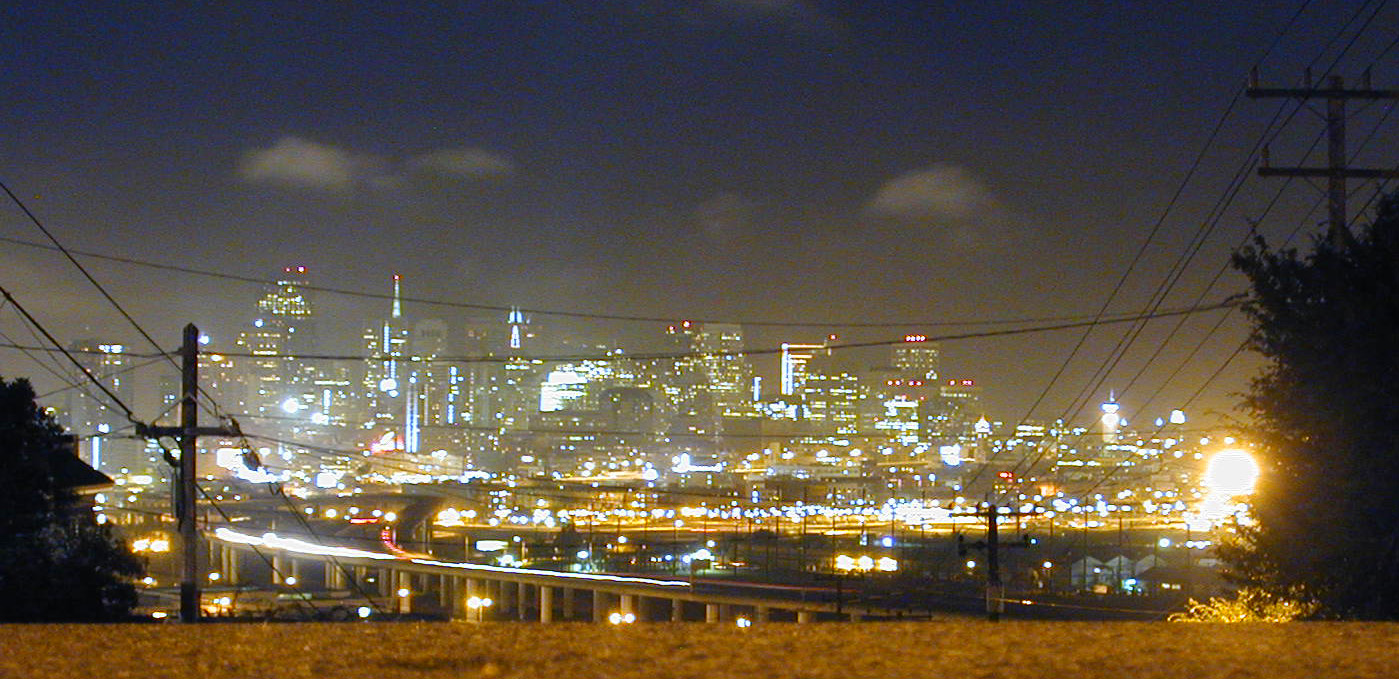
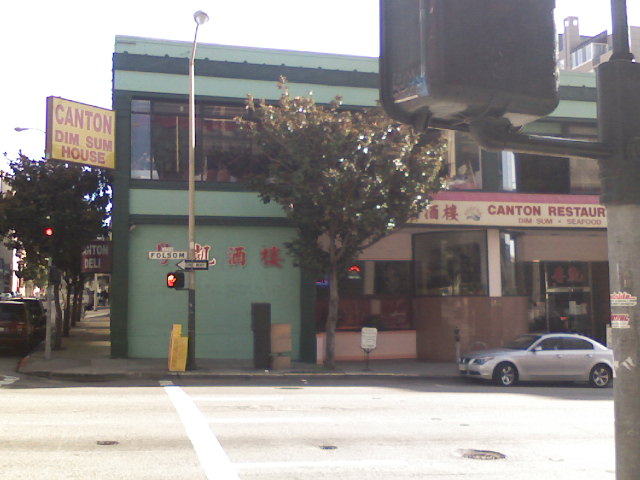
waterfallwaterfall sf_nightsf_night dimsumdimsum
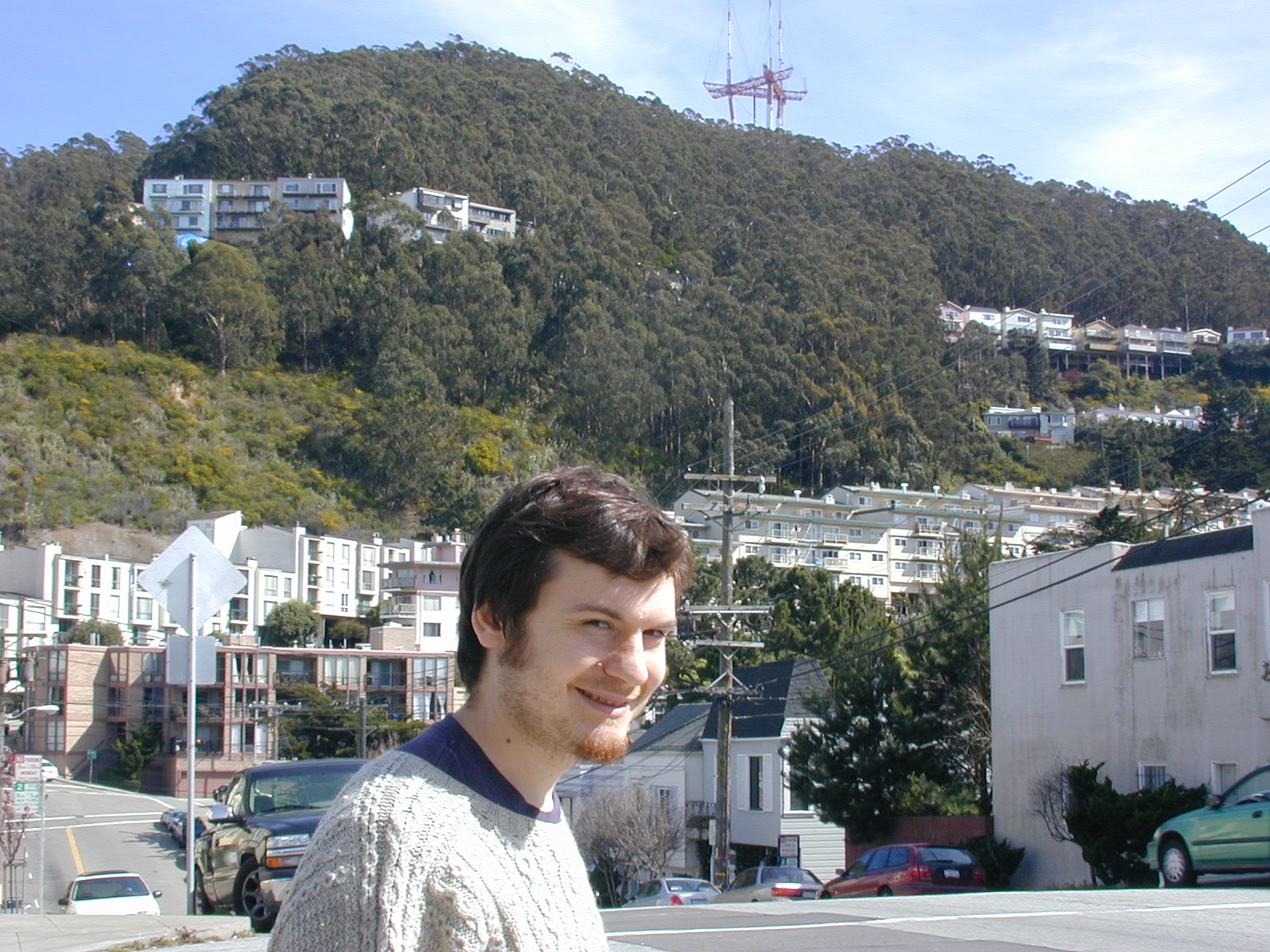
MikeSFMikeSF bigeyesbigeyes mike_sdmike_sd
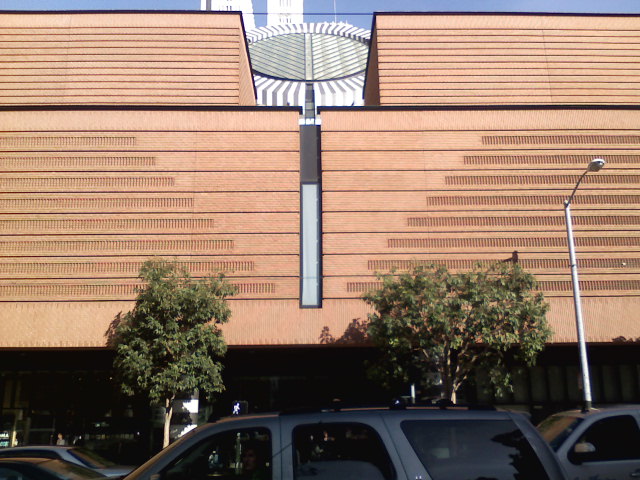
museum_outsidemuseum_outside mike_age_22mike_age_22 cafe_outsidecafe_outside
CDC08
Pictures of IEEE CDC 2008, Cancun, Mx.
cloudy_beachcloudy_beach palm3palm3 more_of_the_beachmore_of_the_beach
some_sort_of_exhibitionsome_sort_of_exhibition funny_moneyfunny_money stylish_cell_towerstylish_cell_tower
palm2palm2 palm1palm1 they_always_ran_out_of_coffeethey_always_ran_out_of_coffee
blurry_nightblurry_night cancuncancun
  • I keep running into Karl Obermeyer at conferences.
  • I am friends with some of the other graduate students in the AMS department and the Computer Science department at UCSC.
Info
Contact info / Resume.
  Michael D. Schuresko
703.785.4637
 
Research statement  
Michael.Schuresko @ gmail.com
 
Michael Schuresko
Baskin School of Engineering
University of California
1156 High Street
Santa Cruz, California 95064
      Address available upon request.
Mountain View, California